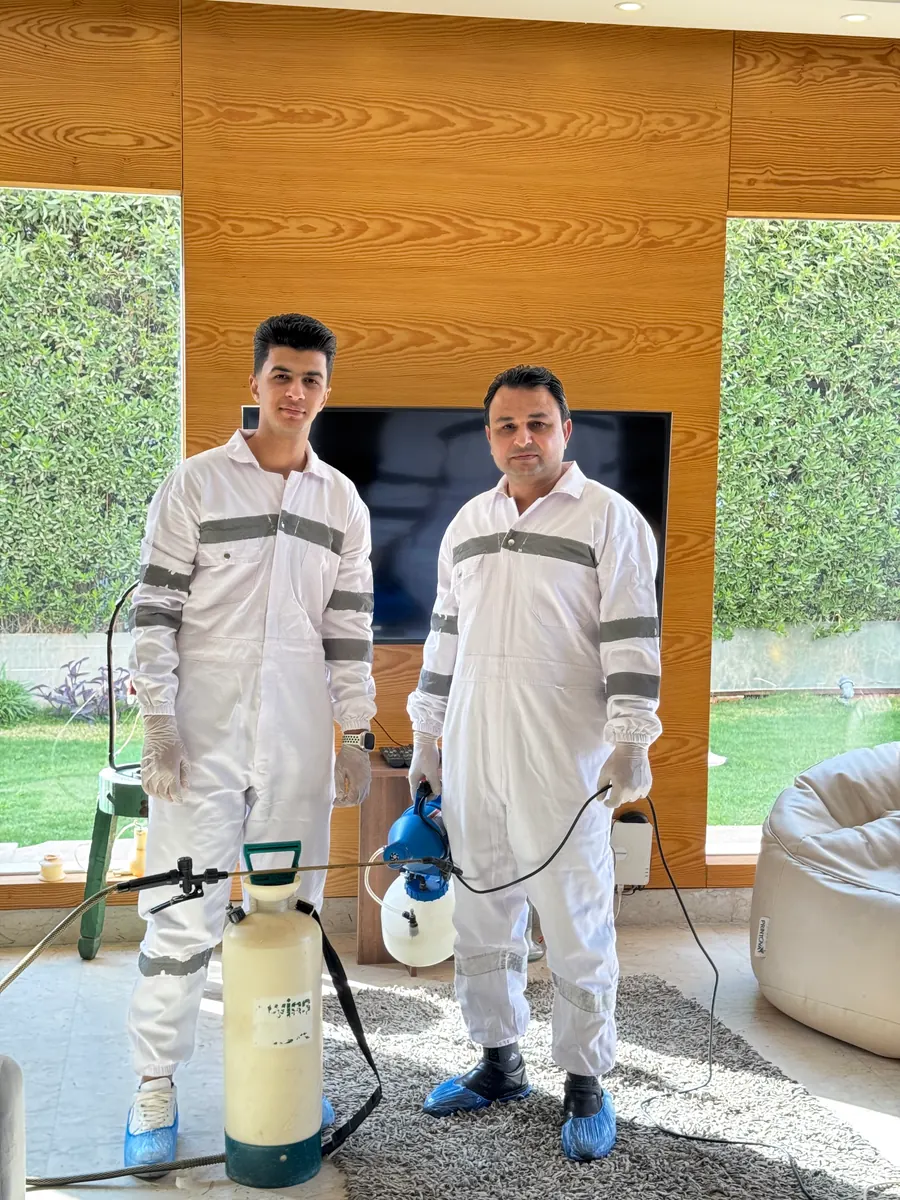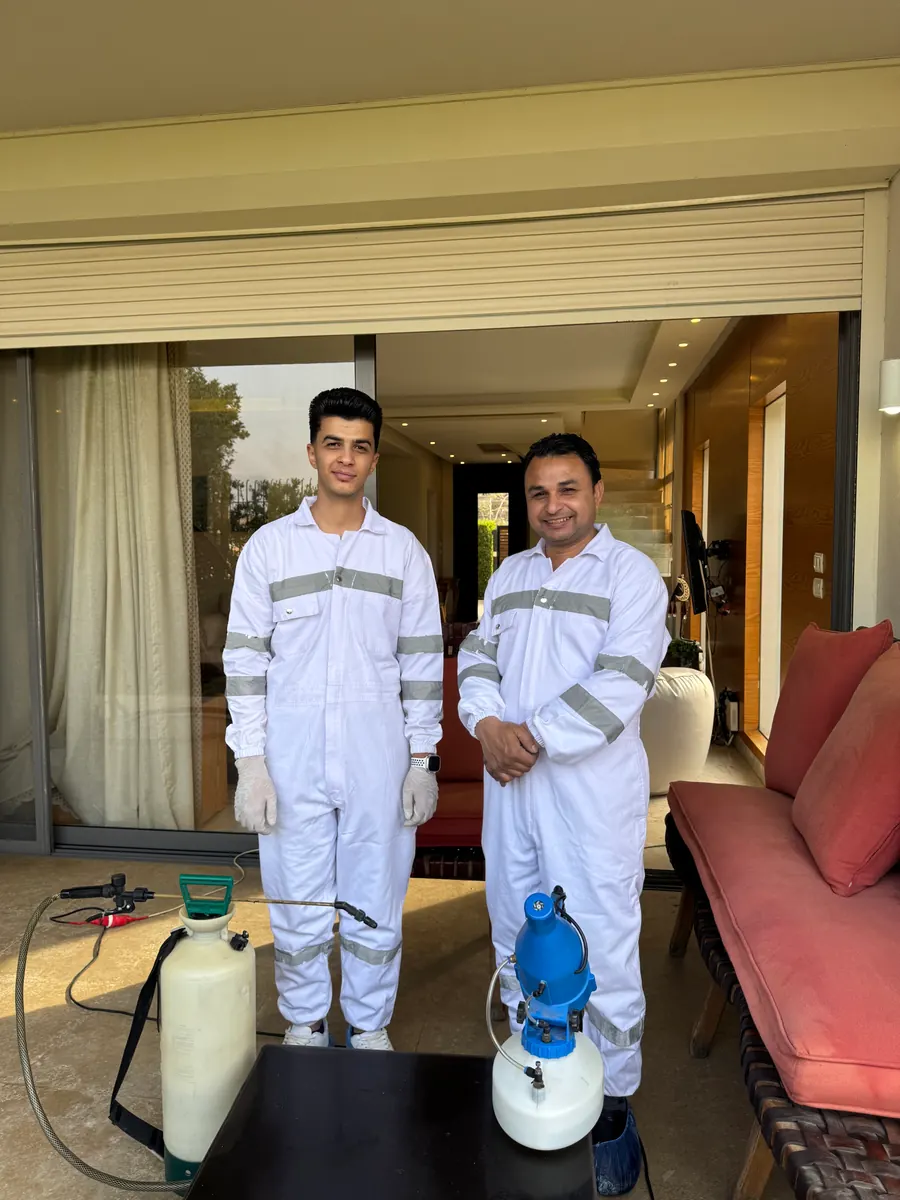
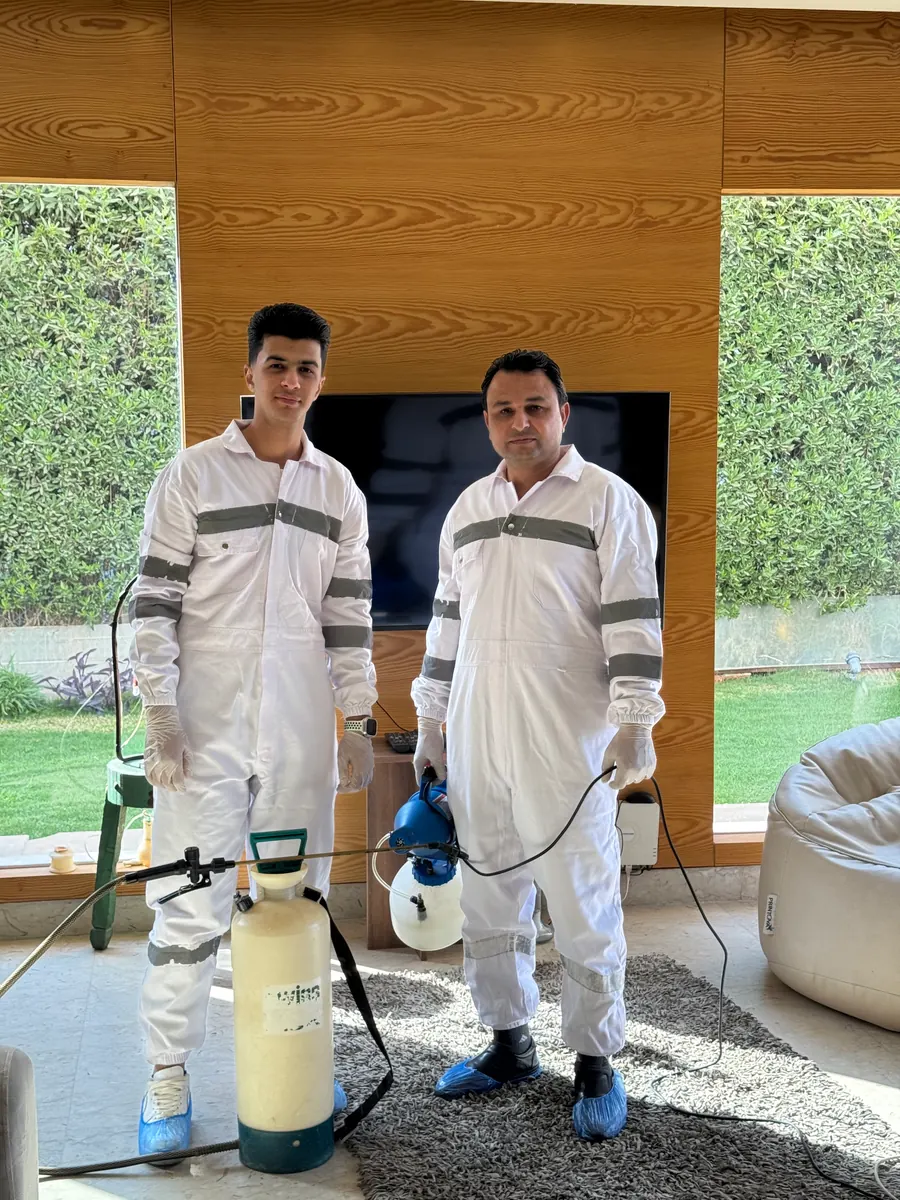
You turn on the kitchen light after midnight and find a cockroach quickly running under the refrigerator. You know then this is not one cockroach — this is one of dozens. Cockroaches are nocturnal animals, and what you see in the light is 2% of the actual count.
In Egypt, the kitchen is the cockroach's number one target: water and humidity, food crumbs, warm cracks behind appliances. The longer cockroaches stay in your kitchen, the greater the risk to your family's health. They are not just visually annoying — they are documented carriers of 33 types of bacteria, 6 types of intestinal worms, and 7 human disease causes.
In this guide, we will explain how to recognize the cockroaches you have (there are different species with different danger levels), why traditional spraying makes the problem worse instead of solving it, and how we at the Specialized German Pest Control Company use a scientific protocol that eliminates them permanently.
Cockroach Species Found in Egyptian Homes
In Greater Cairo specifically, you deal with 3 main cockroach species, and each species needs different handling. Understanding the species is half the solution:
1. The German Cockroach (Blattella germanica) — The Most Dangerous and Common
Small in size (12-15mm), light brown in color, with two dark stripes behind the head. This is the famous "German cockroach" — its native habitat is tropical Africa, and it has astounding breeding capacity: a single female produces 300-400 cockroaches in her lifetime. This species particularly prefers kitchens and bathrooms because it needs high humidity. It is the most resistant to popular pesticides, and the most dangerous health-wise.
2. The American Cockroach (Periplaneta americana) — The Big Flying One
Large in size (40-50mm), reddish brown in color, flies short distances in hot weather. Prefers drains, garbage rooms, and humid basements. Less numerous than the German but scarier due to size. Travels from neighboring buildings through pipes and large cracks.
3. The Oriental Cockroach (Blatta orientalis) — The Black One
Medium-sized (25-30mm), shiny black in color, prefers cold humid places (basements, drain pipes, under sinks). Moves relatively slowly. Annoying because it secretes a strong foul smell that lingers in wood and paper.
Why Did 85% of Those Who Tried Themselves Fail to Treat Cockroaches?
1. Spraying scares cockroaches but does not kill them
When you spray an ordinary pesticide, the cockroach senses the air change before the drops reach it. The result: it flees to a deeper place — behind the wall, inside electrical outlets, under the floor. The visible part of the problem disappears for 48 hours, then cockroaches return from their deeper hiding spots, with new eggs.
2. 97% of cockroaches you never see
The cockroach you see on the floor is the tip of the iceberg. In an average kitchen, if you see one cockroach = there are at least 50 cockroaches hiding in walls, under the refrigerator, behind the stove, inside cabinets. Surface spraying does not reach them, so they continue breeding.
3. Cockroaches develop rapid resistance
The German cockroach specifically has astounding genetic ability to develop pesticide resistance. A 2019 Purdue University study proved that the German cockroach developed resistance to 3 different pesticide categories in one generation. Pesticides you buy from the market are usually 20+ years old, and cockroaches have evolved against them.
4. Treating only the kitchen is not enough
Cockroaches travel between the kitchen, bathroom, and living room. When you treat the kitchen, cockroaches temporarily move to the bathroom, and when the pesticide weakens, they return. Treatment must include the entire home in the same session.
The Approved German Cockroach Treatment Protocol
At the Specialized German Pest Control Company, we use a 7-step protocol for cockroach treatment. This protocol is approved by the German BAuA Institute and tested on thousands of cases in Egypt:
Step 1: Inspection and Diagnosis
The technician inspects the entire home, identifies the cockroach species, discovers main nests (small black fecal clusters), and maps activity points. This step is necessary because every home is different, and there is no uniform treatment.
Step 2: Gel Baits
Instead of spraying that scatters cockroaches, we use specialized German gel baits. The cockroach eats the bait, returns to its nest, dies there, and is then eaten by other cockroaches — a "domino effect" occurs that kills the entire colony from within. These baits are completely safe for children and pets (placed where no one can reach).
Step 3: Boric Acid Powder in Openings
In electrical outlets, behind plates, in deep cracks, we place a specialized powder that sticks to the cockroach's legs as it passes. The cockroach carries it to its nest, killing the rest of the colony. This step is excellent for places gel cannot reach.
Step 4: Drain and Sewage Treatment
Cockroaches enter the home in 70% of cases through drains and sewage. We place specialized chemical prevention in all drains, and place metal mesh in large drain openings to prevent large cockroach entry.
Step 5: Sealing Entry Points
We fill all the cracks we discovered (around pipes, in walls, around windows) with insulating material. This step provides long-term prevention — without it, cockroaches from neighboring apartments will enter over time.
Step 6: Follow-up Visit (After 21 Days)
After 3 weeks, we return for inspection. This is when any eggs that existed before treatment hatch. We apply a second treatment targeting newly hatched cockroaches before they mature and breed.
Step 7: Final Verification and Warranty
After 45 days, final inspection. If clean, written 3-year warranty certificate. If any trace, additional free treatment.
Health Risks of Cockroaches: Why You Should Not Underestimate Them
Many consider cockroaches just a visual nuisance. The medical reality is much more dangerous. The cockroach walks on the drain, then on animal waste, then on your plate. This is not exaggeration, this is its daily cycle. The 5 most dangerous diseases the cockroach transmits:
- 1Salmonella — causes severe gastroenteritis, very dangerous for children and elderly
- 2E. coli — one of the most famous causes of food poisoning
- 3Asthma allergies — cockroach secretion proteins are a main cause of asthma attacks in children (American study confirmed 23-60% of urban children's asthma cases linked to cockroach secretions)
- 4Dysentery and typhoid — transmitted by cockroaches from drains to food
- 5Hospital bacteria (Staphylococcus aureus) — especially in dense residential buildings
Our Field Experience: 4,800 Kitchens in 30 Years
Since our beginning, we have treated 4,800+ cockroach-infested kitchens — from small apartments in Imbaba to major restaurants in Zamalek and hospitals in Nasr City. We learned that an externally clean kitchen may hide severe internal infestation, and that luxury villas are not immune — they are sometimes harder because cockroaches transfer from neighboring gardens.
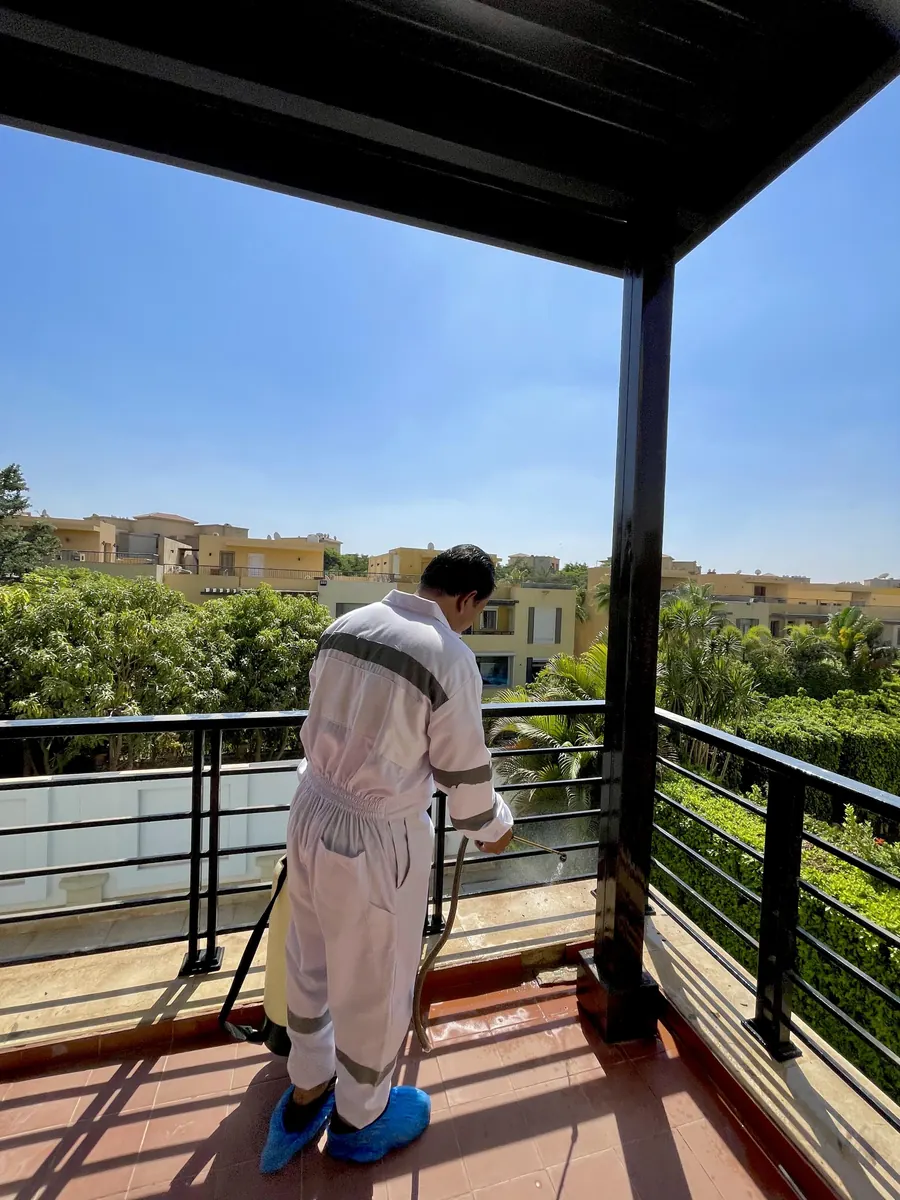
"I was spraying every week. Each time I said "this is the solution." Each time cockroaches returned. With the German Pest Control Company, they treated in one day, and I have not seen a cockroach in 14 months. The difference is the professional method, not the "secret" in the pesticide."
How to Prevent Cockroach Return: 7 Tips After Treatment
- 1Do not leave dirty dishes in the sink at night — this is the biggest cockroach magnet
- 2Empty kitchen trash every night, and use a tightly sealed trash can
- 3Make sure to close all food bags (rice, sugar, pasta) in tight containers
- 4Inspect behind appliances every month — behind the refrigerator and stove is the favorite hideout
- 5Fix any water leaks immediately — cockroaches need water more than food
- 6Do not leave your pets' water all night — put it out in the morning and remove at night
- 7Call us immediately when you see one cockroach — small problems are easier than large ones
Frequently Asked Questions About Cockroach Control
Are the pesticides you use safe for the kitchen?
Yes, completely. In the kitchen we use gel baits placed at specific points (not sprayed on surfaces). The gel is small dots hiding in cabinet corners that your hand or food does not touch. 100% safe for adults, children, and pets.
Do I need to empty the kitchen before treatment?
No. We place the gel in cracks and corners, so no need to empty cabinets. We only recommend keeping uncovered foods (without lids) away from the area for the duration of the session only.
How long until I see results?
In the first 48 hours you will notice an increase in dead cockroach count. This is normal and expected — it means treatment is working. Within a week, activity decreases 90%. Within 3 weeks, the home is clean.
Do you treat cockroaches in restaurants and hospitals?
Yes. We have a specialized division for commercial facilities, working at hours that do not affect the establishment's activity. We have written warranty — daily reports — certified health certificates to present to authorities.
If cockroaches come from my neighbors, will treatment help me?
Very helpful. Our treatment includes sealing entry points, so cockroaches from neighbors will not be able to enter. But if neighbor infestation is large, we recommend convincing them of joint treatment — we offer a discount for multiple treatments in the same building.
Does the treatment have an odor?
The gel and powder have no noticeable odor. You can stay home during and after treatment, and no extended ventilation needed.